How to get stronger without “working out”

Have you ever looked at a high-level student perform a deep Tam Tui (one-legged squat) and wondered, “How do they have the strength to do that?”

The answer usually isn’t that they spend hours in the gym destroying their muscles.

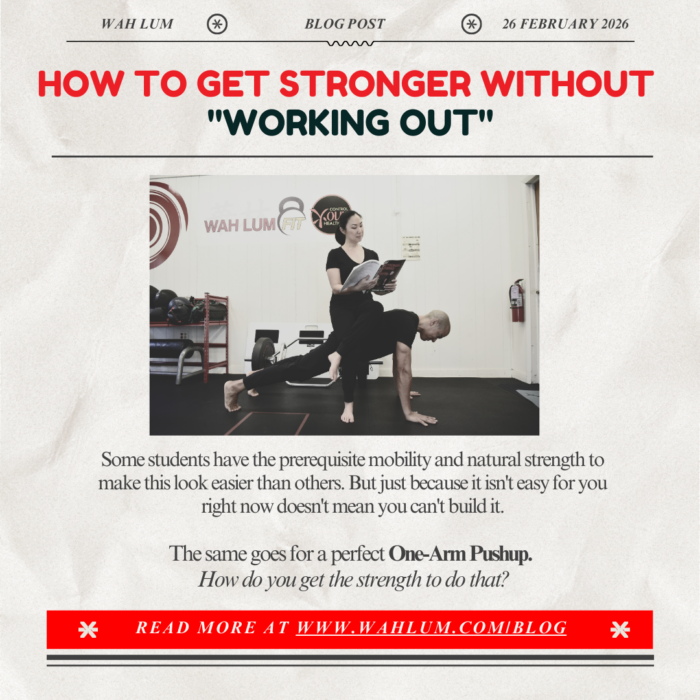
Yes, some students have the prerequisite mobility and natural strength to make this look easier than others. But just because it isn’t easy for you right now doesn’t mean you can’t build it.

The same goes for a perfect One-Arm Pushup. How do you get the strength to do that?

The answer is to treat strength as a skill, not just a physical attribute.

There is a concept in strength training called “Greasing the Groove” (GTG). It was popularized by Pavel Tsatsouline in his book The Naked Warrior, and it is the perfect methodology for martial artists.

Here is how it works and how you can use it to master your bodyweight mechanics.

The Concept: Strength is a Skill

Imagine you are trying to learn a new song on the piano. Would you practice it once a week for 5 hours until your fingers bled and you were exhausted?

I guess that is an option. But the better option would be to practice it for 10 minutes a day, every day. You would play it perfectly, stop before you got tired, and come back to it later.

Greasing the Groove is the same concept applied to strength.

When you do an exercise, your brain sends a signal through your nervous system to your muscles. The more often you send that signal without fatigue, the more efficient the “groove” becomes.

The Rules of GTG

  1. Frequency over Intensity: You do the movement throughout the day, but never to failure.
  2. Stay Fresh: You should feel stronger after the set than when you started. If your max is 5 reps, you only do 1 or 2.
  3. Perfect Form: Because you are “grooving” a neurological path, every rep must be perfect. If you practice sloppy reps, you are greasing a sloppy groove.

The “Naked Warrior” Combo for Kung Fu

If you want to build full-body tension and power for your forms, try applying GTG to these two movements:

  1. The Tam Tui (One-Legged Squat/Pistol) In the fitness world, this is called a “Pistol.” In Wah Lum, it’s the strength behind our Tam Tui kicks and deep stances.
  • The Progression: If you can’t do a full one yet, don’t force it. Use a box to sit down on, or hold a doorframe for assistance.
  • The Groove: Every time you walk through a specific doorway in your house, do one perfect rep on each leg.
  1. The One-Arm Pushup This teaches total body integration, connecting the hand to the core to the feet.
  • The Progression: Start doing them on an incline (like against a kitchen counter or a staircase). As you get stronger, move lower to the floor.
  • The Groove: Every time you go into the kitchen, do one perfect rep on each arm.

The Result

By the end of the day, you might have done 10-20 reps of each exercise. By the end of the week, that can be up to 140 reps.

You aren’t sweaty. You aren’t sore. But your nervous system is learning how to fire those muscles with incredible efficiency.

So, pick a move you want to master. Stop trying to “workout” until you drop. Start greasing the groove.

As my strength coach Brett Jones would remind me about GTG, the reps are done fresh, frequently, and flawlessly. You need all three for each rep.

See you in training,

Sifu Oscar


P.S.  There are 2 ways I can help you Start the groove. 

  1. See it for yourself: The best way to understand Wah Lum is to see it in person. Email us kungfu@wahlum.com with Observation and we will set up a time for you to come visit a class.
  2. Guidance: The best way to get strong is to start small and be consistent. If you are looking for a program to help you build the habit of daily movement, Control System: Foundations is the blueprint. Email us kungfu@wahlum.com with FOUNDATIONS and I’ll send you the details.
10 minutes a day to build muscle? (Actually, yes.)

Last week I told you that “10-minute Tai Chi walks” won’t build muscle. I stand by that.

But that doesn’t mean you can’t build muscle in 10 minutes. You just have to change the intensity.

I recently came across a study shared by Dr. Andy Galpin (worth following if you’re into this stuff) that completely changes the conversation for anyone who claims they are “too busy” to train.

Quick disclaimer: 10 minutes of air squats isn’t the same as actual training. We’re not delusional here.

But it turns out 10 minutes a day can build real, measurable muscle. Not magic, just science.

The Study: “Exercise Snacking” 

Researchers at the University of the Bundeswehr Munich wanted to solve a problem: despite resistance training being critical for health, most people don’t do it.

They took 30 women with sedentary desk jobs, the kind of jobs where you sit so long you forget you have legs, and split them into two groups.

  • Group A: Lived their normal lives.
  • Group B: Did “Exercise Snacks,” brief 10-minute bodyweight workouts during work hours, 5 days a week.

(You can read the full study here: Resistance exercise snacks improve muscle mass in female university employees)

The Results (The “Muscle Miracle”) 

After 12 weeks, the results were undeniable:

  • The Snacking Group: Gained 0.42 kg (about 1 lb) of lean muscle.
  • The Control Group: Lost muscle (which is typical as we age).

Now I know what you’re thinking. “Less than a pound? That’s it?”

But here’s where it gets interesting. Women typically lose about 1.1 kg of muscle per decade. These women reversed nearly half a decade of muscle loss in just three months, all while wearing their work clothes.

Why It Works 

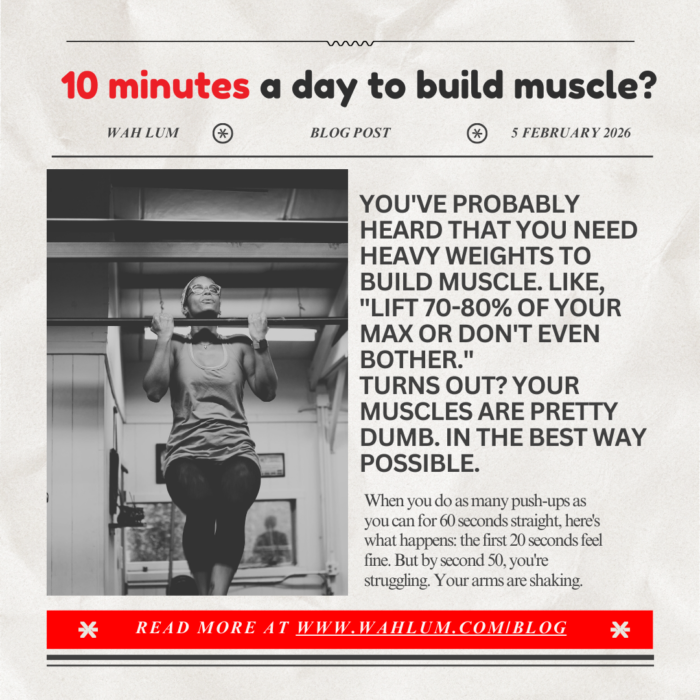
You’ve probably heard that you need heavy weights to build muscle. Like, “lift 70-80% of your max or don’t even bother.”

Turns out? Your muscles are pretty dumb. In the best way possible.

When you do as many push-ups as you can for 60 seconds straight, here’s what happens: the first 20 seconds feel fine. But by second 50, you’re struggling. Your arms are shaking.

What is happening is your easy-to-recruit muscle fibers are tapping out. They’re done. So your body has to call in reinforcements, the bigger, harder-to-activate fibers that usually only show up when things get heavy.

By the end of that set, you’re recruiting nearly as many muscle fibers as you would with a loaded barbell. Your muscles don’t actually know the difference between “this weight is heavy” and “this effort is hard.” They just know they’re being challenged.

The Protocol: How to use this 

If you are already lifting heavy in the gym, keep doing that. But if you have been “meaning to start” for six months, or you spend most days sitting… this is your golden ticket.

Your 10-Minute Protocol: Set a timer for 10 minutes. Perform each exercise for 45-60 seconds (AMRAP: As Many Reps As Possible), then move to the next.

The “No-Gym” Menu (Pick the option that fits your joints):

  1. The Squat Slot: Standard Squats OR Wall Sits (if knees are sensitive)
  2. The Push Slot: Push-ups OR Wall Push-ups (stand further back to make it harder)
  3. The Single-Leg Slot: Reverse Lunges OR Standing Side Leg Raises (Great for balance, zero knee impact)
  4. The Core Slot: Plank OR Standing Knee Raises
  5. The Posterior Chain: Glute Bridges OR Standing Calf Raises
  6. The Finisher: Repeat your favorite one from above until the timer beeps!

The Secret Sauce 

You must do AMRAP (As Many Reps As Possible). Don’t just go through the motions like you’re checking a box. Make it hard. Feel the burn. Give yourself something to actually adapt to.

The Bottom Line 

This study matters because it removes the excuses. 

  • Can’t afford a gym? Don’t need one.
  • Don’t have time? It’s literally 10 minutes.
  • Don’t know how to use equipment? Bodyweight only.

Every single person in the study who finished it said they’d keep doing it afterward. That is unheard of in fitness research.

You don’t need to lie about Tai Chi to sell health.

If you want to lubricate your joints, regulate your nervous system, and build the kind of deep stability that prevents falls? Do Tai Chi.

And let’s face it: it is cool that you are practicing a traditional martial art. There is so much more you get from it than just physical health, like the martial intention, the mental focus, and the journey toward becoming the best version of yourself.

If you have 10 minutes and want to reverse muscle aging? Do Exercise Snacks.

-Sifu Oscar


Want to try the Exercise Snacks? Comment to this blog and let’s talk about how to make this work for your schedule. If you tell me your biggest “trouble spot” (knees, shoulders, or just lack of time), I can help you pick the right 6 moves from the menu above.

Curious about the Tai Chi side? If you want to see what “The Evidence in the Temple” looks like in real life—and see the balance and focus we talked about—come visit us.

You can view our Class Schedule Here. 

Better yet? Come see it in action. Comment with the word “OBSERVE” if you’d like to stop by and watch a class this week.

We Need To Talk About That Shirtless Guy On Facebook

We’ve all seen the videos scrolling through our feeds lately.

There is an influencer (usually shirtless, usually sporting six-pack abs and veins popping out of their biceps) doing a “Tai Chi Walk.” The caption promises that this simple, slow movement is the secret ancient hack to melting belly fat and getting shredded.

It is time for a reality check.

That guy didn’t get that body from Tai Chi.

He got that body from heavy resistance training, progressive overload in the gym, and a strict caloric deficit. He is using a physique built by iron (and probably extra “supplements”) to sell you a practice built on softness.

It is a marketing lie, and frankly, it is disrespectful to the art we practice.

The “Physique Mismatch” 

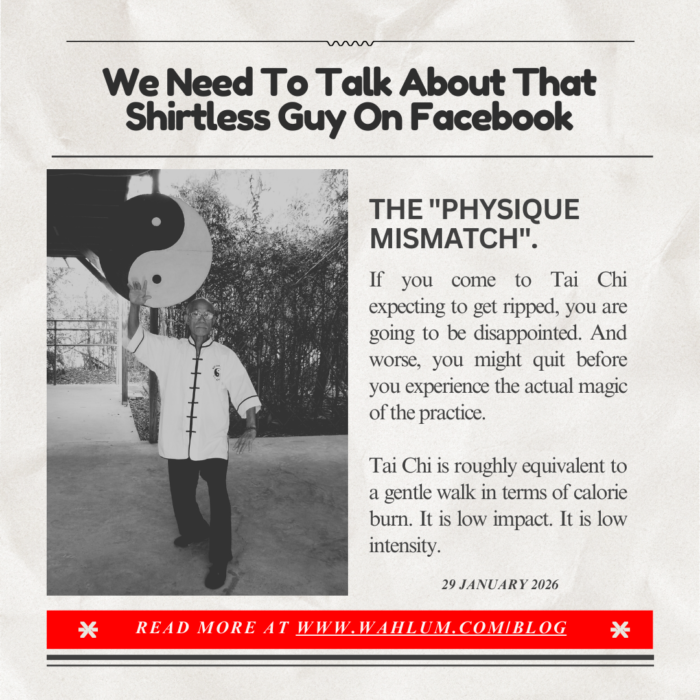
If you come to Tai Chi expecting to get ripped, you are going to be disappointed. And worse, you might quit before you experience the actual magic of the practice.

Here is the simple physiology: To build bulging muscles, you need to tear muscle fibers with heavy resistance so they grow back larger. To lose significant weight, you need a caloric deficit.

Tai Chi is roughly equivalent to a gentle walk in terms of calorie burn. It is low impact. It is low intensity. 

That isn’t a flaw in the system; that is the entire point.

The Evidence in the Temple 

I look around and see students who have been practicing Tai Chi faithfully for 10, 15, even 20 years.

They are 70 years old and have great balance. They have reduced the risk of serious falls, while their peers are recovering from broken hips.

If Tai Chi were a weight-loss drug, these 20-year veterans would have failed. But Tai Chi isn’t a weight-loss drug. It is a longevity strategy.

What You Actually Get (Better than Abs) 

When we stop chasing the “six-pack lie,” we can appreciate what Tai Chi actually offers. It offers things that a calorie deficit cannot give you:

  1. Proprioception & Fall Prevention: We are training the nervous system to know exactly where the body is in space. This is the difference between stumbling and recovering versus falling and breaking a bone as we age.
  2. Joint Lubrication: Think of Tai Chi as WD-40 for your body. It gently moves synovial fluid through the joints, keeping them healthy without the grinding wear-and-tear of high-impact cardio.
  3. Stress Regulation: The “influencers” aren’t totally wrong—Tai Chi does lower cortisol (the stress hormone). While this might not melt 30 pounds of fat overnight, it stops the stress-cycle that ruins our health in modern life.

The Bottom Line

If you want to lose weight, look at your nutrition. If you want to build big biceps, go lift heavy weights.

But if you want to be able to move those muscles without pain when you are 80? If you want to tie your own shoes, play with your grandkids on the floor, and navigate the world with confidence and stability?

That is why you are here.

Don’t let social media distort your reality. 

Your practice is working, even if your waistline stays the same. You are building a body that lasts, not just a body that looks good on Instagram.

See you in class.

-Sifu Oscar


P.S. I know some of you do want to build muscle but feel like you don’t have the time. Next week, I’m going to share a new study that proves exactly how 10 minutes a day can build real muscle (and no, it’s not by walking slowly). Keep an eye out.


P.P.S.

1. Schedule a time to observe a class.
Interested in Kung Fu or Tai Chi?  First step is to watch a class and see if we would be a good fit! Email: kungfu@wahlum.com for an appointment.

2. Become part of my exclusive Coaching Group with CYH Remote Coaching.  Get personalized coaching delivered right to your phone and catered to your specific goals.
Email: kungfu@wahlum.com for info.

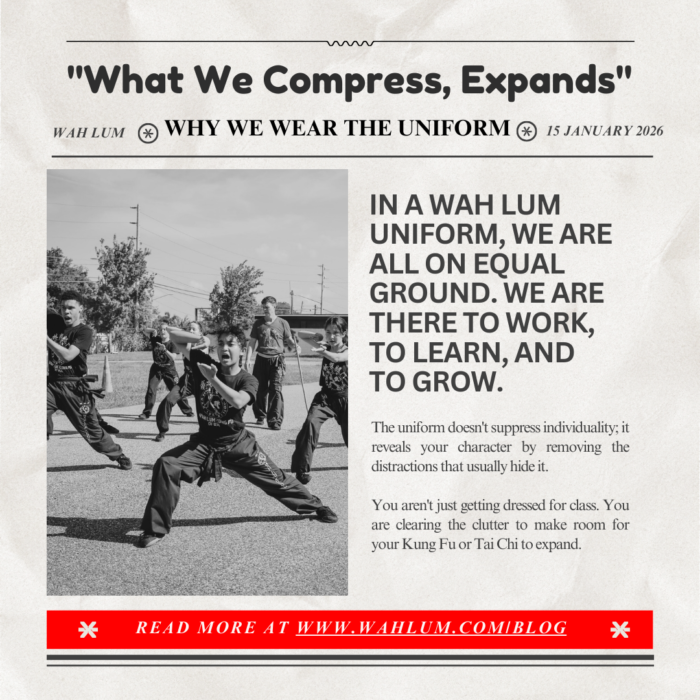
“What We Compress, Expands”: Why We Wear the Uniform

Hello Wah Lum Family,

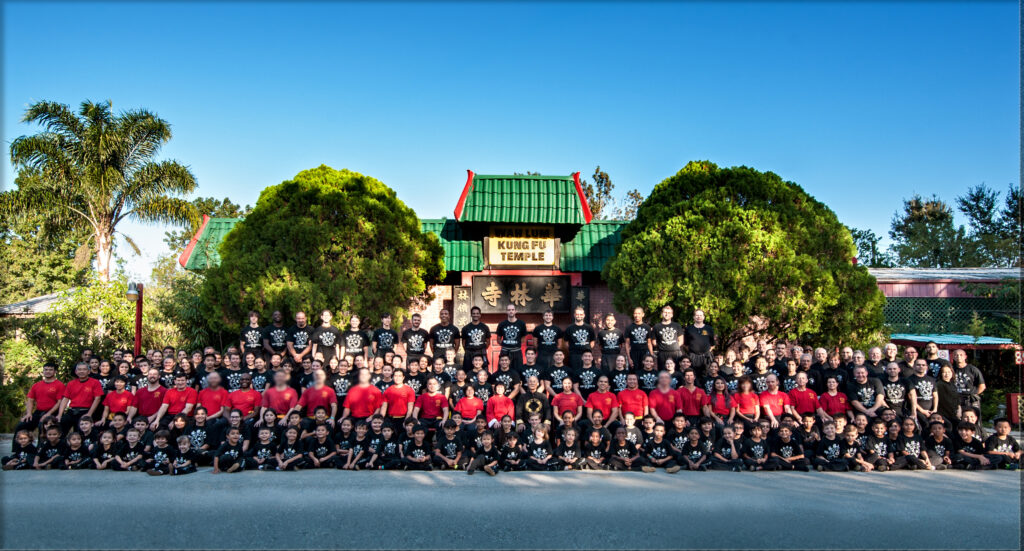
When you walk into the Temple, you see a sea of black uniforms (and some white, for our Tai Chi classes).

It looks professional, and it signifies that we are all part of the same team. But have you ever stopped to think about the deeper value of wearing the uniform?

On the surface, the benefit is obvious: Simplicity.

You don’t have to waste mental energy deciding what to wear to class. You don’t have to worry if your outfit matches or if it’s appropriate for training. You simply grab your uniform, and you are ready. But this simplicity unlocks something much more powerful.

“What we compress, expands.”

Renowned strength coach and author Dan John uses this phrase to explain the hidden benefits of uniformity. It begs the question: By “compressing” our choices of what to wear, does our training actually expand?

We believe the answer is yes.

When we remove the distraction of designer logos, expensive shoes, and fashion statements, we strip away the superficial. When everyone wears the same thing, we stop looking at the outfit and start seeing the human person.

By compressing the external variables, we expand what truly matters:

  • We notice the intellect and ideas: We focus on the students’ questions and their understanding of our martial art.
  • We notice the quality of work: Without the distraction of what you are wearing, the focus shifts entirely to how you are moving.
  • We expand our focus: Your mental energy isn’t on how you look; it is on your stances, your power, and your spirit.

In a Wah Lum uniform, we are all on equal ground. We are there to work, to learn, and to grow.

The uniform doesn’t suppress individuality; it reveals your character by removing the distractions that usually hide it.

So, the next time you put on your uniform, remember: You aren’t just getting dressed for class. You are clearing the clutter to make room for your Kung Fu or Tai Chi to expand.

See you in training,

Sifu Oscar

wah lum kung fu temple


P.S. Ready to join the team? Training Kung Fu or Tai Chi is easier when your daily habits line up with your goals. Our Control System: Foundations is a 21-day remote program designed to simplify your nutrition and movement habits so you are ready to train. Email back with Foundations if you’re ready

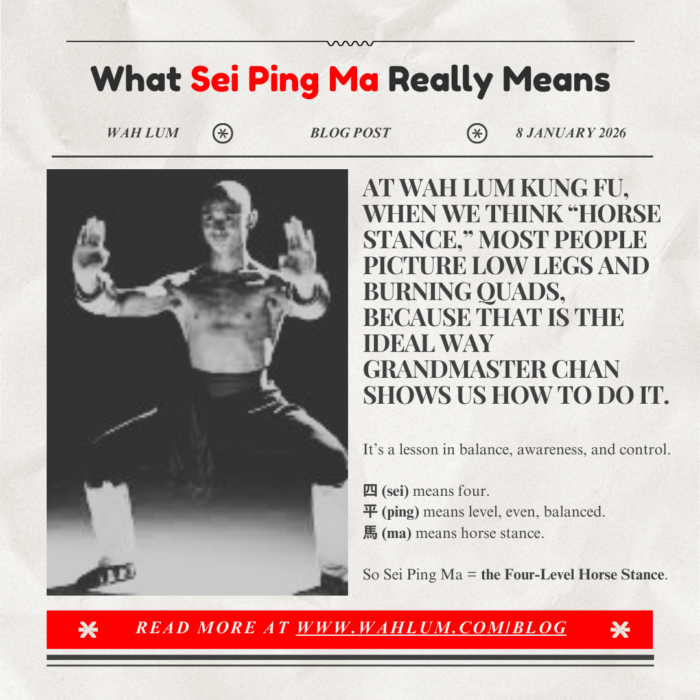
What Sei Ping Ma Really Means

At Wah Lum Kung Fu, when we think “horse stance,” most people picture low legs and burning quads, because that is the ideal way Grandmaster Chan shows us how to do it. 

Let’s break down the meaning of Sei Ping Ma (四平馬) so we can see that it is more than just a posture or basic stance.

It’s a lesson in balance, awareness, and control.

四 (sei) means four.

平 (ping) means level, even, balanced.

馬 (ma) means horse stance.

So Sei Ping Ma = the Four-Level Horse Stance.

Why “four”?

Because the stance teaches you to level and align the four main checkpoints of the body:

  • shoulders
  • hips
  • knees
  • feet

From above, the stance creates a square. From within, it builds evenness. If you study the Chinese character for the number four, you’ll see the structural similarity.

In our Kung Fu practice, this stance teaches you how to root, breathe, and stay centered even when the legs get tired. It’s both a martial arts stance and a practice of staying balanced in all four directions. 

You can also see your mobility (ankles, hips, and thoracic spine) revealed in how well you can hold this stance.

For our extra-mobile students: a strong Sei Ping Ma isn’t about how low you go, it’s about how level you stay.

How Tai Chi Differs

In Tai Chi, our open stance is a horse stance, or Ma Bo, but at a slightly higher elevation. Tai Chi emphasizes softness, relaxation, and ease, so Sei Ping Ma’s structure and tension would be counter to what we’re trying to accomplish in Tai Chi practice.

Cantonese Terms

  • Horse stance: Ma Bo (馬步)
  • Sei Ping Ma: Sei Ping Ma (四平馬)

How’s your horse stance training going lately? Next time you drop 

into Sei Ping Ma, check those four checkpoints and see what your body is telling you.

See you in training, 

Sifu Oscar


P.S. Feel like your hips or knees are too stiff to hold a stance? You can fix that from home. I have a remote coaching program called Active Mobility designed to help you build the flexibility and strength you need for life (and Kung Fu). Email kungfu@wahlum.com with MOBILITY and we’ll send you the info.

Spread the Pressure

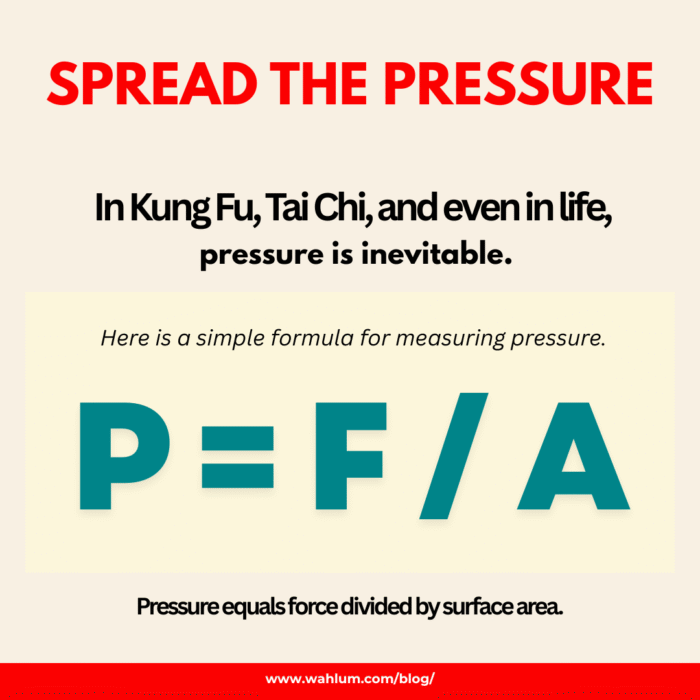
In Kung Fu, Tai Chi, and even in life, pressure is inevitable.

Strategist Lulu Cheng has a formula for measuring pressure: P = F / A — Pressure equals force divided by surface area.

If the same amount of force hits a wide surface, the pressure is low. But if that same force is concentrated into a single point — like a needle — it can pierce through anything.

It’s the same in combat and in daily life.

A wide stance, a solid structure, or a connected team spreads out the pressure. But if you’re alone or too narrow in focus, even a small, focused force can break you.

When life pushes hard, we might not be able to change the force coming at us — but we can widen our surface area.

Lean on your training partners. Ask for help. Connt with your community. Or simply take a step away and do some deep breathing.

That’s the benefit of being part of the Wah Lum family — we don’t face challenges alone. (Have you read my post on The Wah Lum Conspiracy?)

Mental and physical attacks, setbacks, and goals are all shared and supported by the people training beside you.

But when you’re the one applying force? That’s when precision matters. Be focused, specific, intentional — like the tip of that needle. That’s how you make an impact.

Remember, everything meaningful in life involves others. Nothing profound is achieved in isolation.

So when you’re feeling overwhelmed or anxious — take action. Move. Help someone.

Because action absorbs anxiety, and connection spreads the pressure.

See you in training,

Sifu Oscar


P.S. Feeling stuck? Build Momentum. Small, consistent action turns pressure into progress. Join our next cycle and keep moving forward. Reply with Momentum and I’ll get you started.


P.P.S. Whenever you’re ready, here are ways we can help you get started.

1. Schedule a time to observe a class.
Interested in Kung Fu or Tai Chi?  First step is to watch a class and see if we would be a good fit! Email: kungfu@wahlum.com for an appointment.

2. Become part of my exclusive Coaching Group with CYH Remote Coaching.  Get personalized coaching delivered right to your phone and catered to your specific goals.
Email: kungfu@wahlum.com for info.

Longevity Training: Staying Strong in Kung Fu and Tai Chi After 56

Lately I have been thinking about what my training will look like 10 years from now, when I am over 56. At that stage, my priorities will shift. 

The goal will not be chasing personal records or max lifts. The goal will be staying strong, mobile, and consistent so I can keep practicing Kung Fu and Tai Chi.

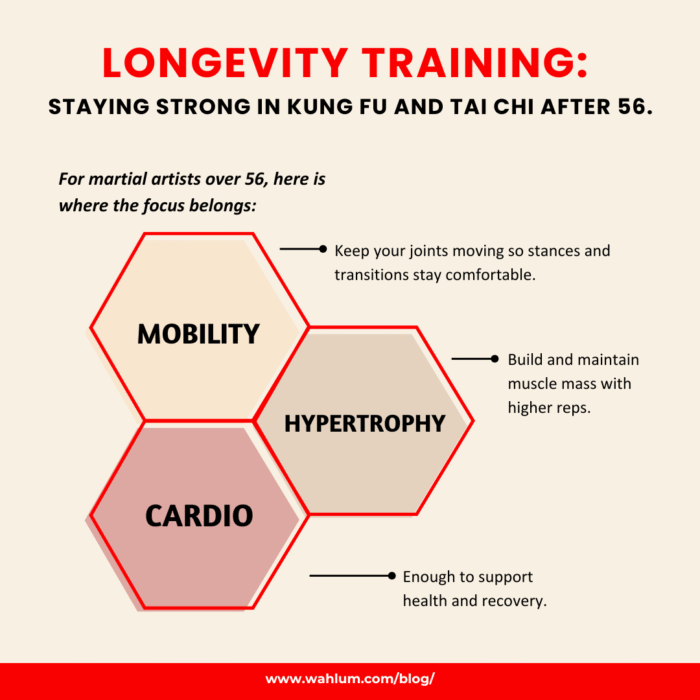
For martial artists over 56, here is where the focus belongs:

  • Mobility: keep your joints moving so stances and transitions stay comfortable.
  • Hypertrophy: build and maintain muscle mass with higher reps. This does not have to mean machines — kettlebells, bodyweight movements, bands, and light dumbbells are all excellent options.
  • Cardio: enough to support health and recovery. This can be as simple as practicing forms at a faster pace with good control, or walking daily.

After 56, it is less about maxing out and more about staying consistent with quality movement. 

Show up, move, breathe, keep the reps high, and release tension between sets. 

In Kung Fu and Tai Chi, that might mean practicing stances, transitions, and balance drills with steady repetition until they feel effortless.

The key is to keep going. Keep training. Keep showing up.

See you in training,

Sifu Oscar


P.S. The principle of stretching what is stiff and strengthening what is weak starts on day one. That is what our Foundations program is all about. Reply with Foundations and I will get you started.


P.P.S. Whenever you’re ready, here are ways we can help you get started.

1. Schedule a time to observe a class.
Interested in Kung Fu or Tai Chi?  First step is to watch a class and see if we would be a good fit! Email: kungfu@wahlum.com for an appointment.

2. Become part of my exclusive Coaching Group with CYH Remote Coaching.  Get personalized coaching delivered right to your phone and catered to your specific goals.
Email: kungfu@wahlum.com for info.

Push, Pull, and the Lessons of Middle Age

In your late teens and 20s, the choices you make with food and training will stay with you. Strength coach Mike Boyle shared the best advice I know when it comes to body composition, and it is especially true in your 20s. 

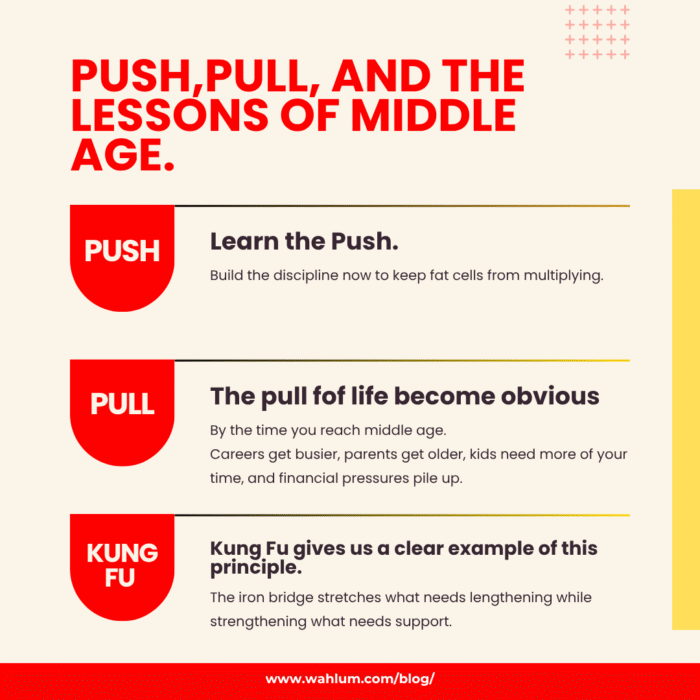
Learn the Push. 

Push the table away. Push the extra beer and pizza away. 

Build the discipline now to keep fat cells from multiplying.

Why? Because once you create fat cells, they don’t just disappear. Fat cells act like balloons. When you overeat, it is like blowing air into the balloon and it expands. 

When you train, eat better, and lose fat, you don’t pop the balloon. You simply let the air out. It shrinks, but it never disappears. 

That is why learning the skill of Push early is so valuable. But even if you did not learn it in your 20s, it is not too late. 

The ability to push away what does not serve you is a practice you can strengthen at any age.

By the time you reach middle age, the Pulls of life become more obvious. 

Careers get busier, parents get older, kids need more of your time, and financial pressures pile up. At the same time, your body starts sending reminders — tighter hips, rounded shoulders, slower recovery. 

Strength coach Dan John sums up the solution perfectly: Stretch what’s stiff. Strengthen what’s weak. For most of us, that means:

  • Stretch: hip flexors, hamstrings, pecs, biceps
  • Strengthen: glutes, ab wall, deltoids, triceps

Over six years ago, Sifu Mimi and I started a video blog series called 40 Fit-Fu. We recorded more than 100 episodes on training, nutrition, and health. 

If you scroll to the bottom of the playlist, you will find our final episodes where we looked back at the first ones and shared how our approach has evolved. 

Training is a lifelong process. What works at 20 might not be what you need at 40, and what you build at 40 sets you up for your 60s.

Kung Fu gives us a clear example of this principle. 

The iron bridge stretches what needs lengthening while strengthening what needs support. 

It is also a classic Push-Pull exercise: pushing the hips up, pulling the shoulders back. That combination is exactly what keeps us strong, mobile, and balanced through every stage of life.

See you in training,

Sifu Oscar


P.S. The principle of stretching what is stiff and strengthening what is weak starts on day one. That is what our Foundations program is all about. This is also remote coaching through our app, with daily actions and accountability built in. Reply with Foundations and I will get you started.


P.P.S. Whenever you’re ready, here are ways we can help you get started.

1. Schedule a time to observe a class.
Interested in Kung Fu or Tai Chi?  First step is to watch a class and see if we would be a good fit! Email: kungfu@wahlum.com for an appointment.

2. Become part of my exclusive Coaching Group with CYH Remote Coaching.  Get personalized coaching delivered right to your phone and catered to your specific goals.
Email: kungfu@wahlum.com for info.

Feedback That Builds Skill

One of the benefits of training at Wah Lum is the coaching team. You are surrounded by instructors who are constantly checking in, correcting, and encouraging. 

That means you are never left wondering if you are on the right path. You are getting feedback in real time.

Think about school. A single high-stakes test like the SAT gives a snapshot of how you performed on one day under stress. It does not define your intelligence or your potential. 

Research shows that frequent, low-stakes quizzes are much better. They provide more opportunities to learn, reduce pressure, and give a clearer picture of growth over time.

Kung Fu and Tai Chi training work the same way. 

Our tests are important, but what matters most is the ongoing cycle of practice and feedback. 

Every class is like a quiz. Every correction from a Sifu or Si Hing or Si Jye is another chance to improve. The result is steady progress that builds confidence without the weight of one stressful moment.

It is also important to remember that feedback is not criticism. Sometimes you will get detailed, specific instruction. Other times you may not get as much, and that is your opportunity to check in on yourself. 

Both are part of learning.

Action Step: This week, take one piece of feedback from your teacher, big or small, and make it your focus in every class. 

Notice how steady attention to a single detail can accelerate your growth.

Mastery comes from consistent effort, clear guidance, and the support of a strong community. At Wah Lum, that is what you receive every time you step on the floor.

See you in training,

Sifu Oscar


P.S. Whenever you’re ready, here are ways we can help you get started.

1. Schedule a time to observe a class.
Interested in Kung Fu or Tai Chi?  First step is to watch a class and see if we would be a good fit! Email: kungfu@wahlum.com for an appointment.

2. Become part of my exclusive Coaching Group with CYH Remote Coaching.  Get personalized coaching delivered right to your phone and catered to your specific goals.
Email: kungfu@wahlum.com for info.

The Power of the Gap

Magician Asi Wind once shared how much it bothers him to see an audience on their phones right up until the moment his show begins. 

He wants to reset their minds, to give them a clean palate before the performance starts. 

Without that pause, people jump straight from screen stimulation into the show without a gap in between.

Neuroscientists explain why this matters. Our brains need those gaps. 

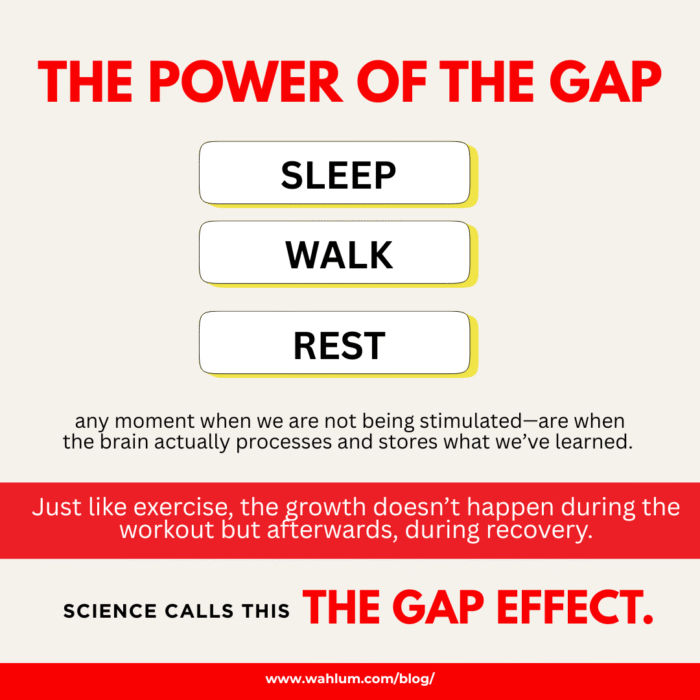
Sleep, walks, rest—any moment when we are not being stimulated—are when the brain actually processes and stores what we’ve learned. 

Just like exercise, the growth doesn’t happen during the workout but afterwards, during recovery.

Science calls this the gap effect. When we stop practicing for a moment, the brain continues rehearsing in the background, replaying what we just learned at incredible speed and even in reverse. 

These quiet spaces allow information to be encoded more deeply than nonstop practice ever could.

This is true in music, math, magic, Kung Fu, and Tai Chi. Constant repetition matters, but spacing it with intentional pauses may be even more powerful. 

In our training, those brief moments of stillness between sets, between forms, or during meditation are not wasted time. They are when the body and mind begin to weave together the lesson.

Mastery doesn’t just come from the work. It also comes from the gaps.

See you in training,

Sifu Oscar


P.S. Whenever you’re ready, here are ways we can help you get started.

1. Schedule a time to observe a class.
Interested in Kung Fu or Tai Chi?  First step is to watch a class and see if we would be a good fit! Email: kungfu@wahlum.com for an appointment.

2. Become part of my exclusive Coaching Group with CYH Remote Coaching.  Get personalized coaching delivered right to your phone and catered to your specific goals.
Email: kungfu@wahlum.com for info.